The New Executive Order: Implications for Psychedelic Treatment

Dr. Sandy Newes
Policy isn't always the most exciting part of psychedelic-assisted psychotherapy.
But without it, none of the clinical work we care about gets to happen.
That's the clearest takeaway from my recent conversation with Gina Giorgio on Living Medicine, and it's one that has stayed with me.
Gina is director of strategy and development at Students for Psychedelic Drug Policy and founder of North Carolina's first statewide psychedelic advocacy coalition, now called Carolinas for Care.
How We Got Here
The shift didn't happen overnight.
Early Johns Hopkins psilocybin studies, the MAPS MDMA research, Oregon's Measure 109, Colorado's Natural Medicine Act — all building blocks. But Gina pointed to something equally important: the role of storytelling and culture in shifting public perception.
People began to see psychedelics not only through a recreational lens, but as something that might happen with a licensed therapist, in a clinical setting, for a specific therapeutic purpose.
That distinction matters enormously.
This Is a Bipartisan Issue
Texas passed the nation's first psychedelic research bill in 2021.
Veterans have been among the most vocal advocates for access — because their suffering has been real, persistent, and undertreated for decades.
Gina named something that deserves to be said plainly: more veterans have died by suicide at home than died in combat overseas.
This is not a political talking point. It is a public health crisis, and it is one of the primary forces driving psychedelic policy reform.
What the Executive Order Actually Does
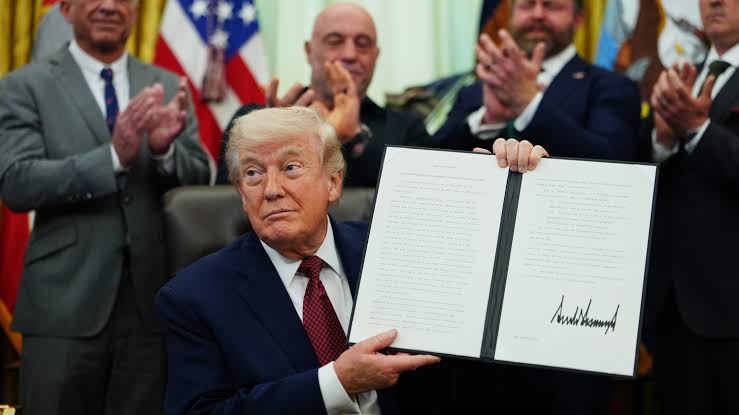
In April 2025, President Trump signed an executive order directing five objectives across six federal agencies: the FDA, DOJ, DEA, HHS, VA, and ARPA-H.
ARPA-H is administering at least $50 million in clinical trial funding — already awarded to Johns Hopkins, the University of Wisconsin-Madison, and USC.
The FDA has also issued priority review vouchers that could reduce review timelines from 10–12 months down to one or two months.
The piece I'm most excited about is the potential expansion of right-to-try access — a pathway that could allow physicians to work with Schedule One substances outside of a formal clinical trial, and much sooner.
What This Means at the State Level
The states are going to be the ones shaping how this actually gets implemented — who can administer these treatments, in what settings, with what training, and how it gets paid for.
North Carolina recently introduced Senate Bill 1018, the Heal Act — a bipartisan bill that creates a breakthrough therapies grant fund and a task force to advise on implementation.
For clinicians and advocates: pay attention to what's happening in your state. These decisions will determine whether this treatment actually reaches the people who need it.
What We Still Don't Know
We don't yet know what training will be required, or who will be authorized to provide these treatments.
We don't know how insurance will develop — and without coverage, we are looking at treatments accessible only to those who can pay out of pocket.
We don't know whether psilocybin itself will be rescheduled, or whether we'll end up with a patented pharmaceutical version rescheduled while the natural compound stays at Schedule One.
These are not small questions, and they will be answered by whoever is at the table.
On Training
Gina spoke at the United Nations Commission on Narcotic Drugs about a gap I think about constantly: therapists cannot currently train with the medicines they may soon be licensed to administer.
We are not ready. Not at scale.
The pipeline of clinicians trained to work with MDMA, psilocybin, and ibogaine in a rigorous, trauma-informed, therapeutically grounded way is far smaller than the need that is coming.
What remains non-negotiable, across all of these medicines, is deep grounding in trauma-informed care. A person in an altered state is not protected simply by the medicine — they are protected by the environment, the relationship, and the care of the person sitting with them.
Get Involved
The executive order didn't come out of nowhere.
It came from sustained, intentional work by a lot of people over a long time — including Gina, who has been building coalitions, writing bills, and showing up for years.
If you care about whether these treatments become real, equitable, and clinically sound: get involved at the state level. Reach out to your representatives. Pay attention.
And if you're in North Carolina, find Gina at carolinasforcare.org. She's creating the table.
Thank you so much for reading and listening! This work is done in community, and I am so grateful for your support.
With care
Dr. Sandy Newes
