Ketamine-Assisted Psychotherapy Training: What Therapists Need to Know Right Now

Dr. Sandy Newes
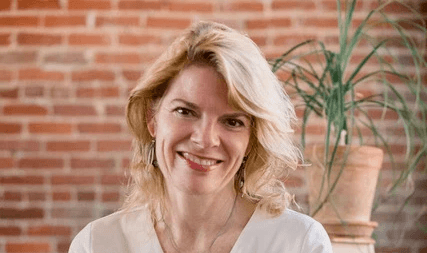
Something a little different happened on this episode of Living Medicine. Instead of me interviewing someone else, I found myself in the hot seat — interviewed by Chad Fransen, who has spent years talking with entrepreneurs and business leaders about building meaningful work. It turned out to be a wonderful opportunity to step back and reflect on where this field is right now, what I've learned since I started doing this work in 2019, and what I think therapists and medical professionals most need to understand as psychedelic-assisted psychotherapy moves closer to mainstream practice.
What the Executive Order Actually Means for Practitioners
The question I'm hearing most often right now is some version of: "What does the executive order mean for me?" And the honest answer is that nobody really knows yet — at least not in terms of what it means for individual practitioners on the ground.
What we do know is that something is happening. Research funding has already been released. Training grants have been awarded, mostly in the university space. And the momentum is real.
What I'd encourage practitioners to do right now is pay close attention to what's happening at the state level, because that's almost certainly where implementation is going to land. There isn't likely to be a federal mandate that all states must follow — this is going to unfold differently in different places, and the states that are already ahead of the curve, like Oregon and Colorado, will be the ones worth watching most closely. If there's any opportunity to get involved with a psychedelic policy coalition in your state, I highly recommend it.
Training is coming, and it's going to be necessary. What's likely to be fast-tracked first is some version of psilocybin — either psilocybin itself or a compound derived from it. MDMA, which many of us were so hopeful about, seems to be a bit lower down on the current priority list. The right-to-try pathway is also something I'm watching closely, because it creates a potential near-term access point for people with life-threatening conditions including PTSD and treatment-resistant depression, allowing them to try research compounds that have promising status before full FDA approval.
And through all of this, I want to remind people: ketamine is and has always been legal. What the executive order means for ketamine is really about increased visibility, increased relevance, and an invitation to sharpen our skills with a medicine that is already extraordinarily powerful and fits naturally into an existing clinical practice. I very much hope ketamine doesn't get overshadowed as other medicines come online — it deserves its place at the table.
Why Ketamine Belongs in Any Psychedelic Therapy Practice
I've been working with ketamine full-time since 2019, and the longer I do this work, the more I appreciate what it uniquely offers. From a practical standpoint, it fits into a clinical practice in a way that the longer-acting psychedelics simply don't. I schedule two-hour sessions. No one is rushed, clients do really deep work, and I can build a coherent series of sessions over several weeks in a way that allows for genuine therapeutic momentum.
Other medicines — psilocybin, MDMA, ibogaine — require full days, and in some cases require clients to discontinue medications weeks in advance. There's a complexity to those logistics that simply doesn't exist with ketamine. And when you compound that with the fact that we've been working with ketamine in clinical contexts for a long time, there's a predictability and a learnable arc to the work that I find genuinely useful, both for myself and for the therapists I train.
I also think the modular, series-based approach to ketamine is one of its most clinically meaningful features. I rarely do fewer than three sessions in close proximity, and I often do four to eight — with booster and maintenance sessions scheduled afterward based on what the client needs. That kind of individualization over time is something we're still learning how to do with other medicines, where we're often still constrained by research parameters.
What Actually Happens in a Ketamine Session
I want to push back a little on the word "preparation," because I think it inadvertently places too much emphasis on the medicine as the central event. What happens in those three to five sessions before any medicine is introduced is not just getting someone ready. It's where I'm doing an extensive developmental history, clarifying treatment goals, identifying the underlying issues that are driving the symptoms, teaching somatic skills, and — perhaps most importantly — building a relationship.
That relational foundation is everything. A person has to feel genuinely seen and understood before they ever take the first dose. Because in the medicine session, their defensive holds are loosened — what my own therapist beautifully calls their "adaptive strategies" becoming less rigidly held — and they are deeply vulnerable. If they don't feel safe and held, that vulnerability can become destabilizing rather than healing.
In the session itself, I'm tracking everything. I use open-ended deepening prompts — "What are you noticing? What's happening? Let's just be curious about that" — and I'm writing down as close to verbatim as I can what the client says, because those words become the raw material for integration afterward. I'm also tracking what I call the parallel process: the way a client enters the experience, drops into it, and comes back out is itself a mirror of how they move through their life. That level of observation — what it tells me about someone's organized sense of self, their defensive structure, their relational patterns — is one of the most clinically rich dimensions of this work.
One thing I've been increasingly focused on is the other side of the trauma coin. We talk a lot in this field about going toward the difficult material — toward fear, toward darkness, toward what's hard. And sometimes that's exactly right. But I'm actually a strong advocate for choice, because choice is itself a core element of trauma-informed care. Sometimes the most important work isn't diving into the pit — it's learning to feel safe when things are okay. Trauma and chronic stress rob people of their ability to feel good, and they also rob people of their ability to trust that feeling good is safe. Helping someone really settle into a moment of ease, to notice it somatically, to be curious about where ease meets holding — that is real clinical work, and it's work I find just as meaningful as processing the difficult stuff.
What to Look for in a Psychedelic Therapy Training Program
I get asked about training constantly, and my answer is always the same starting point: find a good fit. Talk to someone at the program before you commit. Get a clear sense of what you're actually going to walk away with.
Beyond that, I have some strong opinions about what makes a training program worth your time. Faculty should be experienced practitioners who are still actively doing the clinical work — not people who did the work once and now just teach about it. Running a training program is a big business and can consume a lot of energy, but it's important that trainers stay fresh and continue to be in the mix.
I feel very strongly that good training programs include experiential sessions with the medicine. And I mean more than one. Here's why that matters: with ketamine, you can do the same dose, in the same room, with the same therapist, three days apart — and the sessions will be different. Understanding that variability in your own body, your own experience, your own psyche, is something you simply cannot get from a textbook or a lecture. It's knowledge that lives in the body, and it's one of the most important things you can bring to your clinical work.
The experiential piece also means you'll do some of your own work in the process. That's not incidental — it's central. Every guest I've had on this podcast who talks about training eventually circles back to the importance of clinicians doing their own reflective work. You need to know your vulnerabilities, your sensitivities, where your own material lives. Because it will show up with clients.
Community is the other thing I feel strongly about. One of my earliest teachers used to say that this work needs to be done in a village. I couldn't agree more. A good training program isn't just content delivery — it's the beginning of a professional home. One of my favorite mentors, Dr. Ron Seagull, has a phrase I love: we're all just confused mammals muddling our way along. Having a community where you can be that confused mammal — where you don't have to have everything figured out — is essential in a field that is this new and this complex.
What Surprises Practitioners Most
When therapists arrive at a training feeling nervous — feeling like everyone else has it figured out and they're just muddling along — what I consistently see surprise them is twofold.
First, they discover that so much of what they already know applies. The real skill set in this work is the synergy between what the medicine makes possible and what you bring to the table as a clinician. Experienced therapists who already have an established clinical foundation — a theoretical orientation, a relational style, a way of understanding what's happening in the room — often find that ketamine-assisted psychotherapy amplifies and deepens skills they've been developing their entire careers. This is one of the reasons I think it's important to be a therapist first and add the psychedelic work later, rather than the other way around.
Second, they are genuinely surprised by how powerful the medicine is — not in the abstract, but in their own bodies, their own experience. There is a profound difference between taking ketamine in a recreational context and taking it in a carefully held therapeutic container with experienced support. I describe it as the difference between meat and fruit. Both are real, but they are not the same thing.
Trauma-Informed Care as the Foundation
I come from a background in wilderness adventure therapy, and one of the things I bring from that world into this one is a deep commitment to trauma-informed care as a foundational framework — not an add-on, not an afterthought. Wilderness therapy and psychedelic therapy share more than people realize: both involve non-ordinary contexts, heightened perception of risk, deep reliance on trust, and significant opportunity to either heal or harm depending on how the container is held.
Trauma-informed care at its core means attending to safety at every single step — not just physical safety, but emotional and relational safety. It means integrating cross-cultural competency, understanding the dimensions of a person's cultural background that shape their experience. It means choice, always: that a person can back out at any time, can move toward the difficult or toward the well-being, and that their agency is respected throughout. And it means a rigorous awareness of ethics and right use of power, because the trust clients place in us during this work is enormous.
I want to be clear about something: trauma-informed care is not the same as trauma processing. It's not the work of going into the hard material. It's the conditions that make it safe to do that work at all — and those conditions need to be present in every session, every interaction, every piece of how a clinic or a training program is structured.
The Responsibility We Carry
I'll end with what I most want practitioners to carry with them out of any good training experience. First, a genuine sense of competence — not arrogance, but the grounded confidence that comes from knowing what you're doing and why. Second, a very clear-eyed understanding that this work can cause harm. We had Dr. Roman Palitsky on the podcast recently — he is running a significant study on adverse effects of psychedelics — and what he's finding underscores something I believe deeply: people can be damaged by this work, and it is our responsibility to do everything we can to prevent that.
The medicine doesn't do the work on its own. The therapist, the container, the preparation, the integration — all of it matters. When something difficult happens, the answer is not to tell the client that this is just what's supposed to be. The answer is to lean into our clinical skill, our training, our community, and our responsibility.
This is weird and wild and fascinating and profound work. It is also serious work, and it requires us to hold each other accountable — to avoid guruism, to stay grounded, to keep growing. The village isn't just a nice metaphor. It's how we do this well.
Thank you so much for reading and listening! This work is done in community, and I am so grateful for your support.
With care — Dr. Sandy Newes
